‘It works’
isn’t
a career strategy.
Learn to design, build, and defend agentic architectures.
An interactive AI tutor that lives in VS Code. No videos. No passive content. Just you, real code, and challenges that prove you didn’t just copy-paste from ChatGPT.
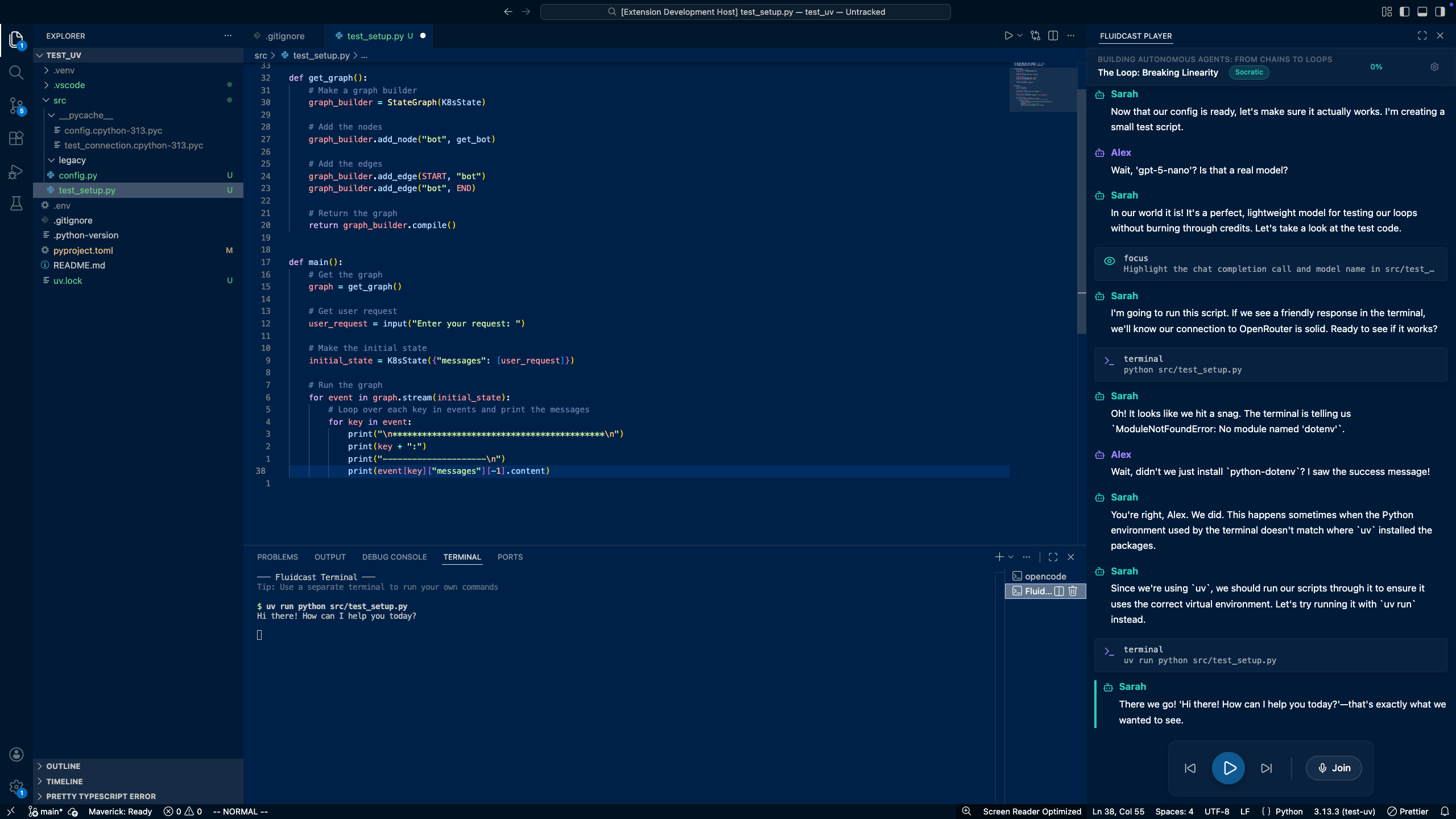
Learn AI engineering
from first principles
Active practice in VS Code, not passive content. Every session is hands-on, every concept is challenged, every decision is yours to defend.
Interactive IDE Tutor
// not another video tutorial
A tutor that lives inside VS Code and pauses for your reasoning. Not a video. A two-way conversation where you ask questions, write code, and think out loud.
Explain Trade-offs
// the part interviews actually test
Practice articulating architecture decisions as you build. The kind of reasoning that separates engineers from prompt-copiers.
Fluid Defense
// the boss fight
Prove you understand at the end of every chapter. Questions, coding challenges, and design decisions. No timer, no pressure — just you and the code.
How it works
From ‘I watched it’
to
‘I can build it’
Three steps. No fluff. The entire loop fits in a lunch break.
Start
> start --no-excuses
Pick a Fluidcast, hit start, and VS Code opens right in your browser. No installs, no config, no "works on my machine" excuses. Your workspace is ready in under a minute.
Learn + Build
while (curious) { build(); }
Follow along with an AI tutor that adapts to you. Write real code, run real commands, ask real questions. 15-30 minute chapters that actually fit into your day.
Defend
git push --prove-it
At the end of each chapter, prove your understanding in Fluid Defense. Answer questions, solve challenges, explain your decisions. The part where "I watched it" becomes "I built it."
Now available
Your first Fluidcast
Ship your first agent by the weekend. Understand why it works by Monday.
Building AI Agents
from First Principles
Go from calling LLM APIs to designing agent harnesses from scratch. Build, evaluate, and understand agentic frameworks — so you stop guessing and start designing.
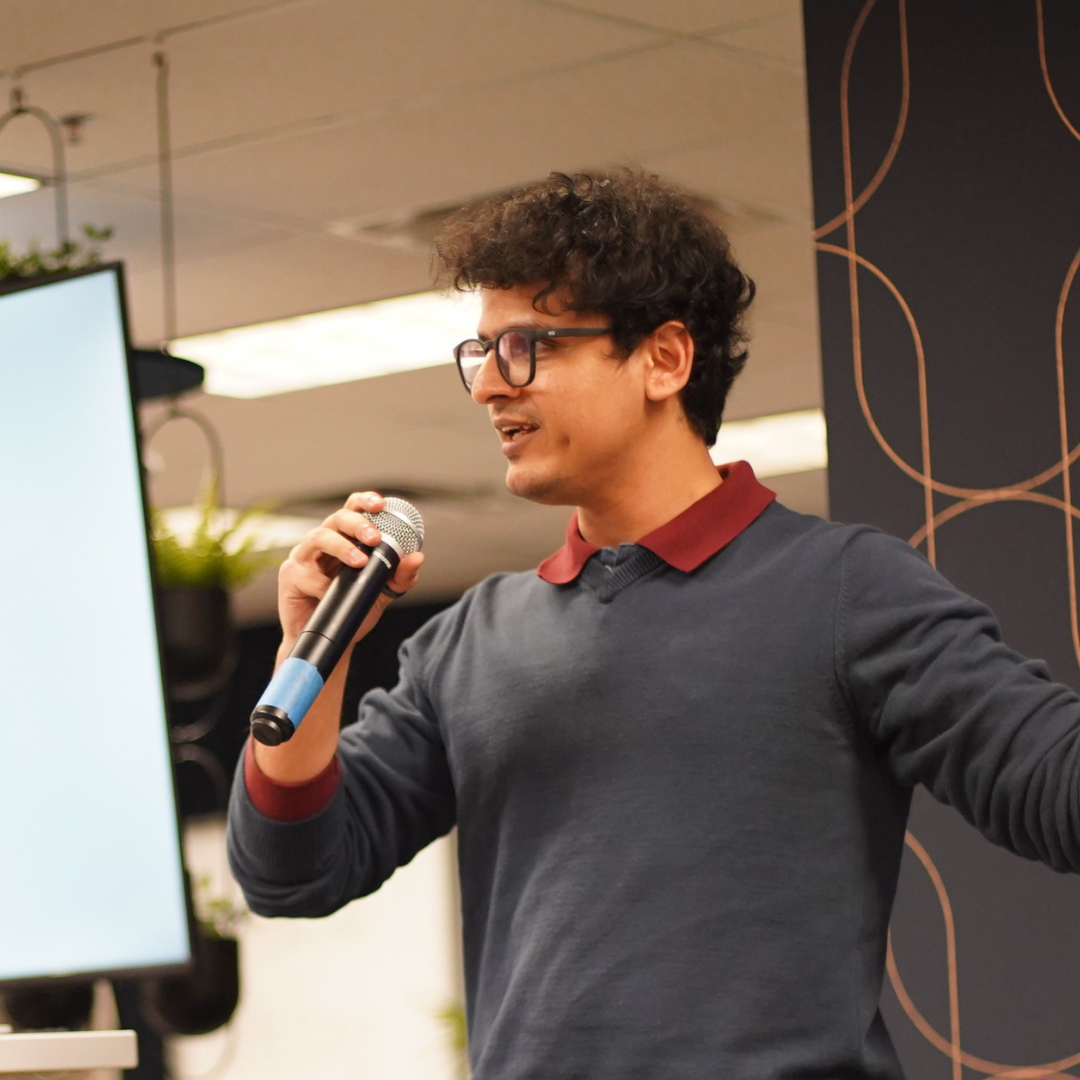
Hi, I’m YourTechBud
// the guy who paused 2-hour tutorials 47 times
I’m a software engineer who builds AI systems and teaches on YouTube. I built Fluidcast because I was tired of tutorials that don’t stick — where you watch someone code for 2 hours and can’t explain a single decision afterward.
This is how I wish I’d learned. Active, challenging, inside the tools you’ll actually use. I’m letting people in gradually so I can learn from you too.